
Tree-themed Quiz 2nd October

Here is forward notice of two upcoming events. More detail will be posted in due course.
On the evening of Thursday 2nd October: the Society’s AGM at Chapel Lawn Village Hall will be followed by a tree and woodland-themed quiz. Open to all: teams of up to four people; £5 entry per team.
Sunday 12th October 9.30 am to 3.00 pm: Apple pressing at Chapel Lawn Village Hall.
Seven volunteers turned out for the final work party of the season last Sunday on a perfectly cloudless spring day. Having no Bob James and his quad bike with us that day, Simon Jameson fired up his 1951 Land Rover to ferry tools and another quillet stone across to the wood, and very picturesque it looked as I’m sure you’ll agree.
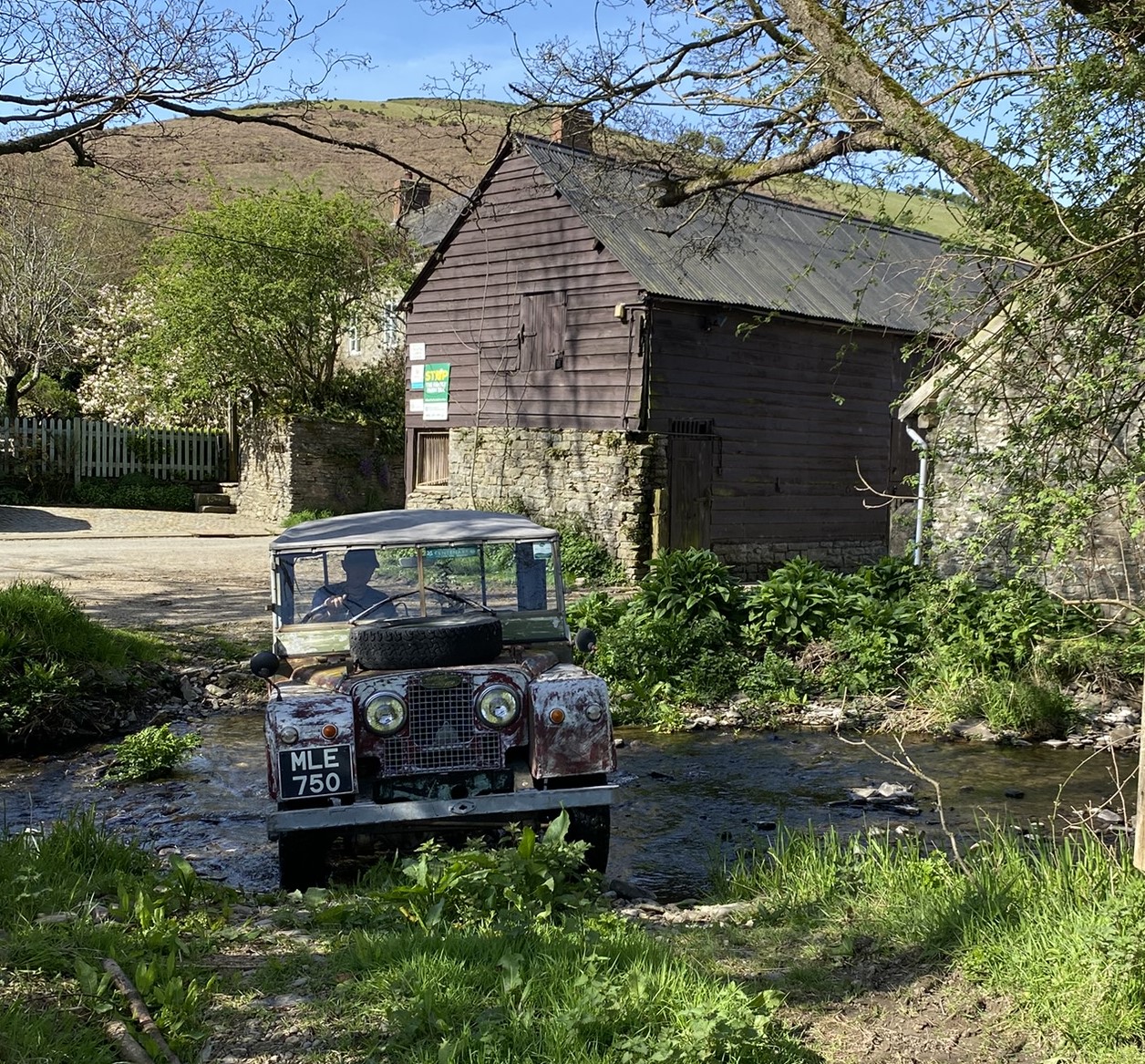
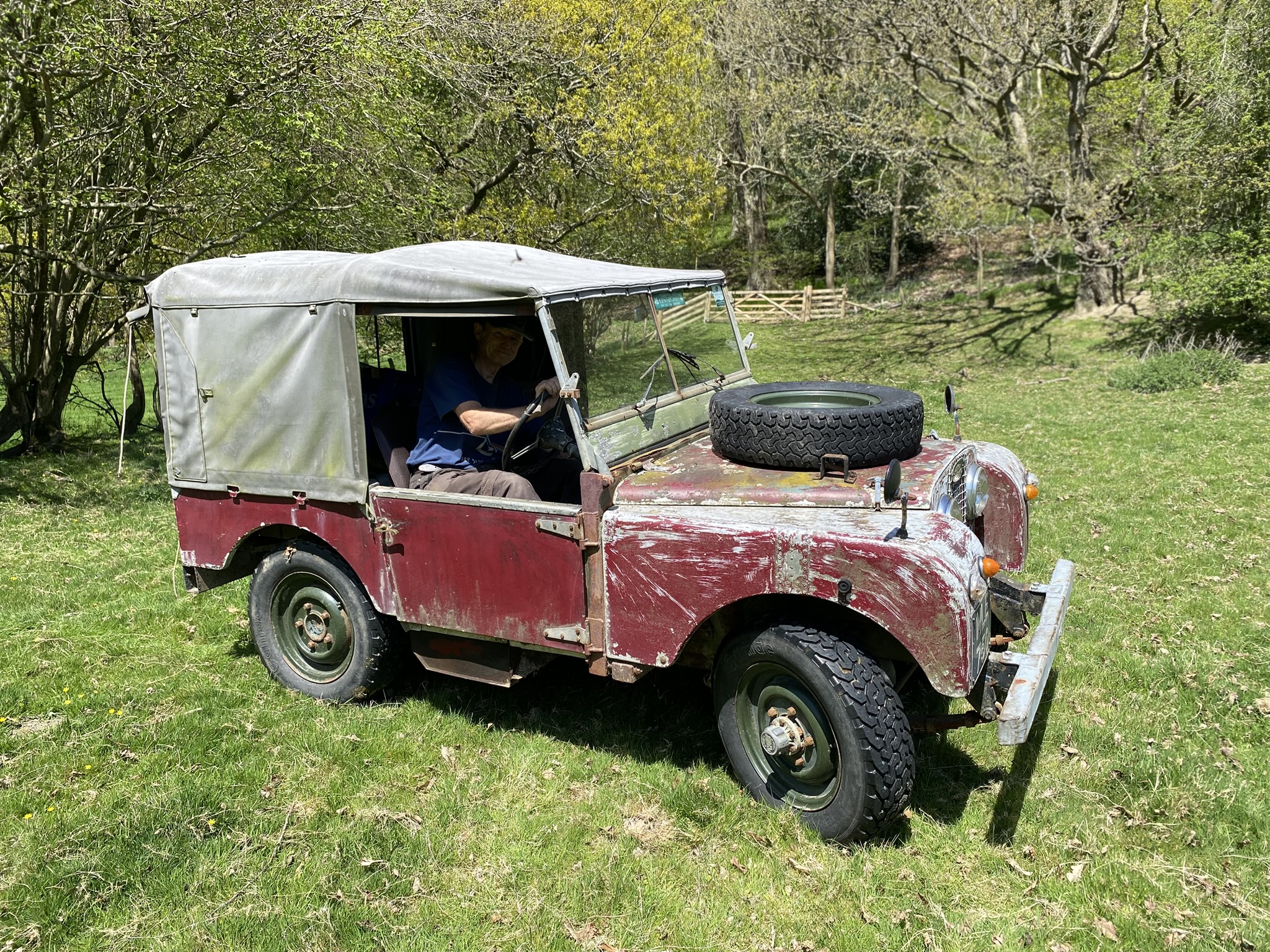
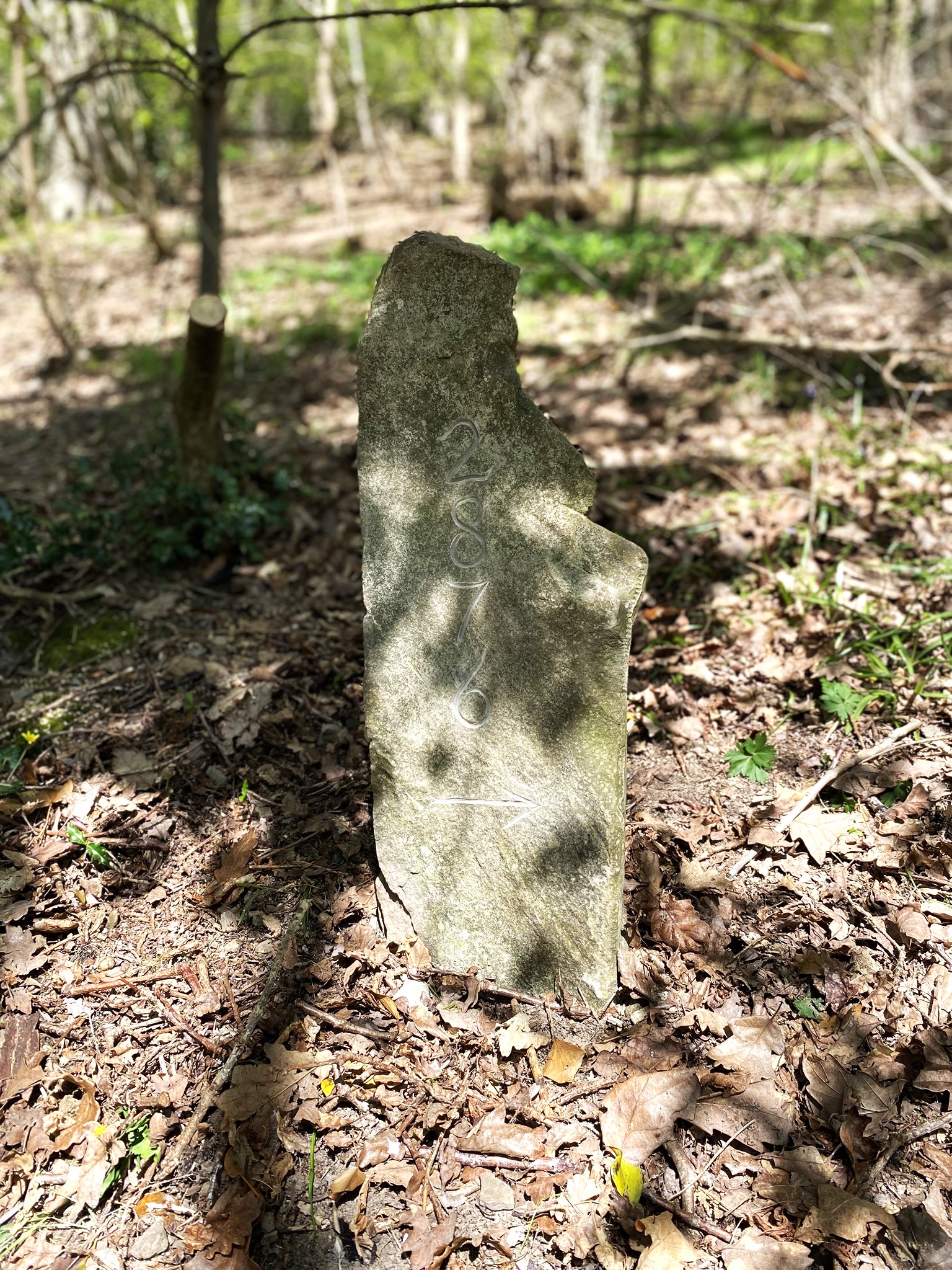
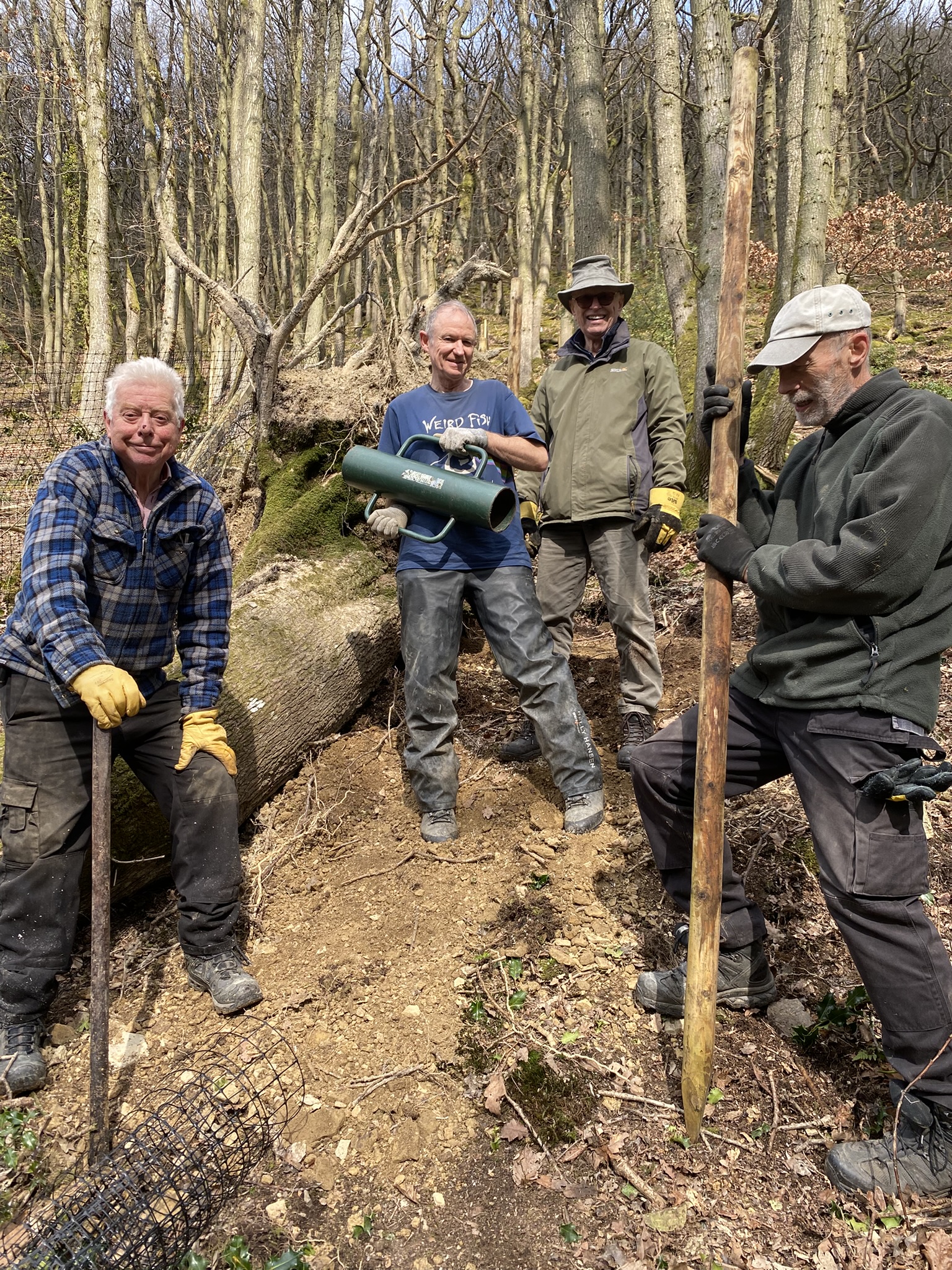
Work involved installing the seventh new quillet stone (no. 2876), dead hedging, repairing a stretch of deer fencing in the new clearing, removing an obstacle from the public footpath, and clearing vegetation that was choking the older deer fencing we had erected in 2017. Things were generally looking good in the quillets. In the original exclosure, the young hazel appeared to be thriving. The Millennium (Pedunculate) Oak we’d planted half way up the rustic steps last year was breaking into leaf, as was the small elder bush we’d very recently transplanted close to the footpath.

Inside the new clearing, the stools of the oaks we had felled in 2023 were thrusting new shoots skywards, and everywhere there were tiny oak seedlings battling for space and light.

The coming months will be an instructive period as we watch with interest how young oaks and the ground flora establish themselves in the new clearing. Watch this space for future news.
The Society recently had the chance to talk at a conference on woodlands organised by the Middle Marches Community Land Trust. This made us pull our socks up and revamp our standard PowerPoint presentation that tells the story of our formation and activities, the history of Brineddin Wood, and what our plans are for our two quillets. The presentation was well received by the audience, so if you are a member of an organisation that might like to hear it, do get in touch with Patrick Cosgrove at pccosgrove@icloud.com.

One of the other presenters was Richard Thomason of Wild about Westwood, well known for his expertise on hazel coppicing. He showed a short film about his work that has just been produced by Shropshire CPRE. It’s well worth setting ten minutes aside to watch – click here.
Having gone to great lengths to protect areas of our woodland from deer by erecting fencing, our greatest fear is that a fallen tree—or even heavy branches—might create gaps that deer will quickly discover. This has happened twice in recent months: once when a fallen branch breached the original deer exclosure, and about a month ago when a tree brought down an entire corner of the fence around the newest clearing. In both cases, there was clear evidence that the deer found the gaps very quickly.
In the original exclosure, they concentrated on eating bramble and fortunately ignored some hazel saplings planted last summer. In the second case, they nibbled the tops of a few shoots on some oak stools. Luckily, in both incidents the damage was spotted within a couple of days, and we were able to make repairs before too much harm was done.
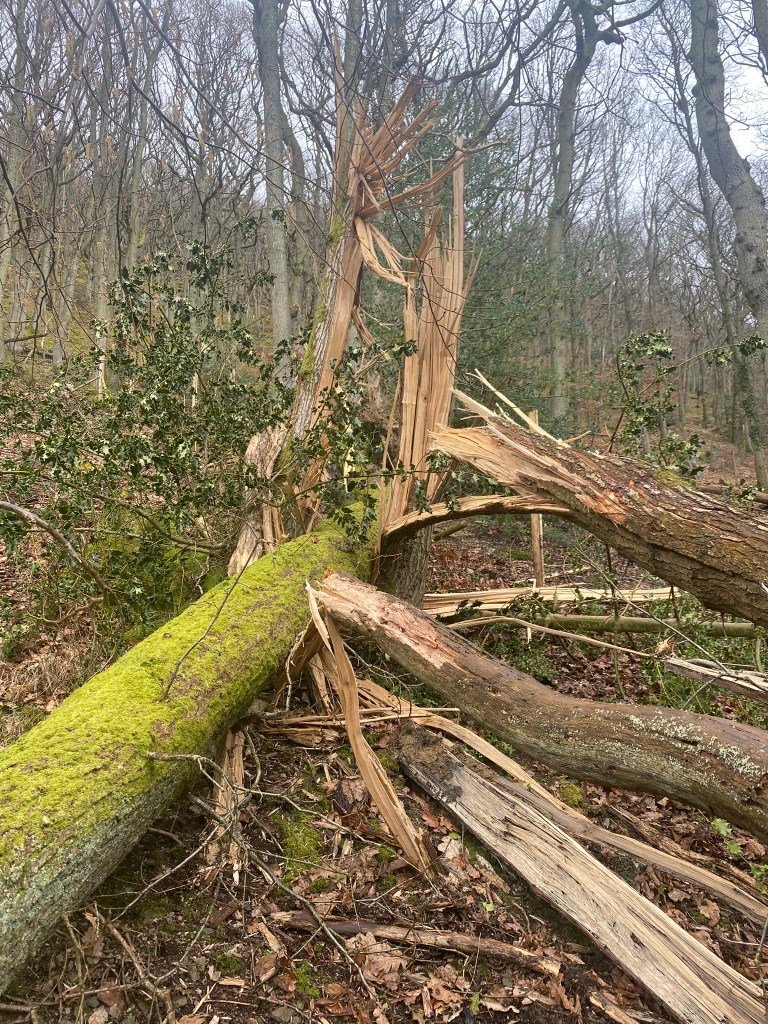
In the latter case, we initially put up a temporary barrier until tree surgeon Nicky Tranter very generously cut up the fallen tree—free of charge—allowing us to properly restore the fencing later. We are extremely grateful to Nicky for taking on a task that would have been difficult for us to manage.
This post is therefore a request to anyone walking near the quillets: please take a slight detour around the exclosures, check that the fencing is intact, and let us know if you notice any gaps. Those of us in Chapel Lawn will be especially vigilant after storms, but as the last two incidents have shown, the deer are very quick to take advantage.
Many thanks.
In November last year, we were happy to have erected two more quillet stones, making five in total if you count the one remaining original marker at the eastern end of the wood. Today we put in two more – numbers 2881 and 2882. These numbers date back to the 1848 Tithe Commutation when, rather than landowners having to pay tithes to the Church of England in kind, parishes were surveyed and every piece of productive land given an annual payment value that was split between the vicar and the Church. Some woodlands were exempted, and this applied to the quillets here in Brineddin Wood, although we don’t know why.


We also partly made up for the last two work-parties that had to be cancelled because of the rotten weather. Vegetation was cleared to help our critically endangered Spreading Bellflower re-appear this year and, very importantly, we made good progress in repairing deer fencing damaged by a fallen tree a few weeks ago. There’s another work party next Sunday, 23rd March. This will be in the afternoon – meet at the Chapel Lawn Village Hall car park at 1.30. Do join us.
And talking of matters historical, here’s what Charles Mickleburgh, surveyor to the Earl of Powis said about the quillets in 1824 when he carried out a survey of the wood.
On the South side Brineddin Hill in this Township there are between 20 or 30 acres of Fine Oak Brush which is cut by the Freeholders each knowing his share by Mere stones at the Bottom adjoining the Hedge, but the top is open to the Common, and C M [Charles Mickleburgh] believes this to be a part of it. The Cottagers cut in it, altho’ the Freeholders grumble, but mostly towards the Top Part; there is a small Track near the top which the Freeholders wish the Cottagers to observe as their boundary, but little attention is paid to it , as the Brush grows much better nearer the bottom where they are tempted generally to go ….. The Mere stones are of recent date being put in about 17(blank!). If this land was coppiced up it would soon be covered with fine young Oak.
What a shame the date was left incomplete. We know the wood was first divided up in1637, and again in 1728, so a system of marking was probably devised then: old maps suggest that planting or retaining distinctive marker trees was one method, while stones may also have been employed or perhaps a little later.
And finally, here’s a photo of a small elder tree that was salvaged from a nearby hedging job last week. In time, it should give a good show of blossom in early summer, and also contribute to a more varied biodiversity. Might the berries even attract dormice?

It’s a long way off, but please make a note in your diary of our 2025 apple-pressing day which will be held on Sunday 12th October at the Redlake Valley Village Hall in Chapel Lawn. This will be the fifth year that we’ve run this event and the weather’s always been good – so there’s obviously no need to bring your umbrella!
If you’ve taken part before, you’ll know how enjoyable it is to bring your apples and screw-top bottles along for scratting and pressing, followed by pasteurisation while you have a coffee and a natter with the others there. If you’ve not been before, and you think you may have a good crop of apples (or can get some from someone who will have), make this your first year.

At a meeting of the RVCBS board on 28th November, and following on from the AGM of 24th October, the composition of the board was decided as follows; Anthony Morgan (Chair). Simon Jameson (Vice-chair), Mark Limbrick (Secretary) with Patrick Cosgrove, Bob James and Sara Randall continuing as board members. As ever, we welcome expressions of interest from others wishing to become board members, especially, but not exclusively, from a younger age-group.

The Society’s AGM was held on 24th October with seven shareholders present. In line with the Society’s rules, two board members, Mark Limbrick and Bob James, stood down, but both were willing to serve again so were re-elected. The Chairman and Treasurer presented their reports and the accounts were approved. These are attached below.
Discussion ensued about the need to attract younger people to the Society, and also how the Society’s longstanding commitment to increasing biodiversity in the woodland was proving to be successful. A vote of thanks was enthusiastically endorsed for Mark Limbrick who was standing down as Chairman after eleven years, but would continue as a board member.
There was then a PowerPoint slide show to illustrate the Society’s work over the past twelve months. This is too large to attach to this web page, but can be emailed separately on request to Patrick Cosgrove at pccosgrove@icloud.com

