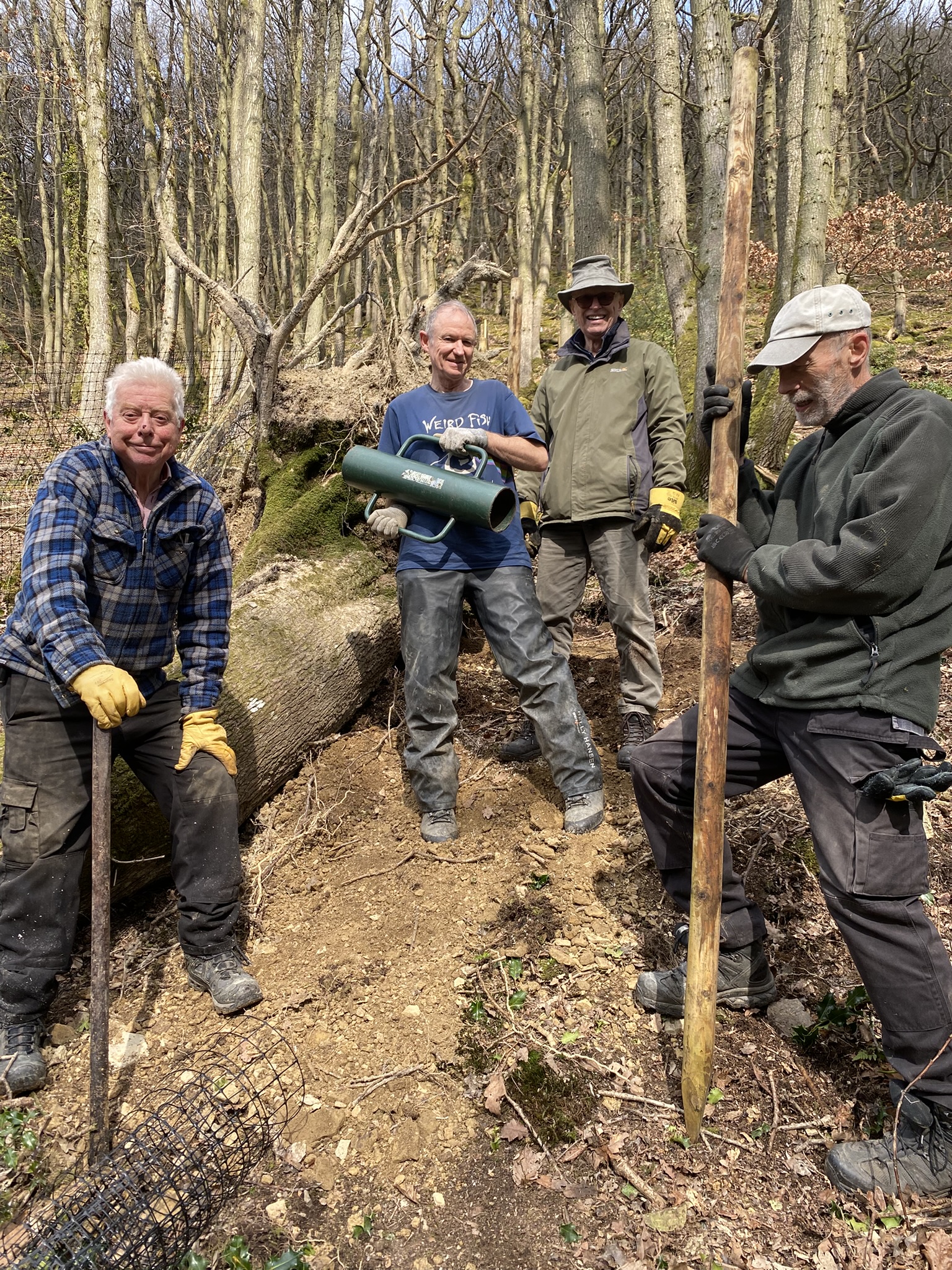
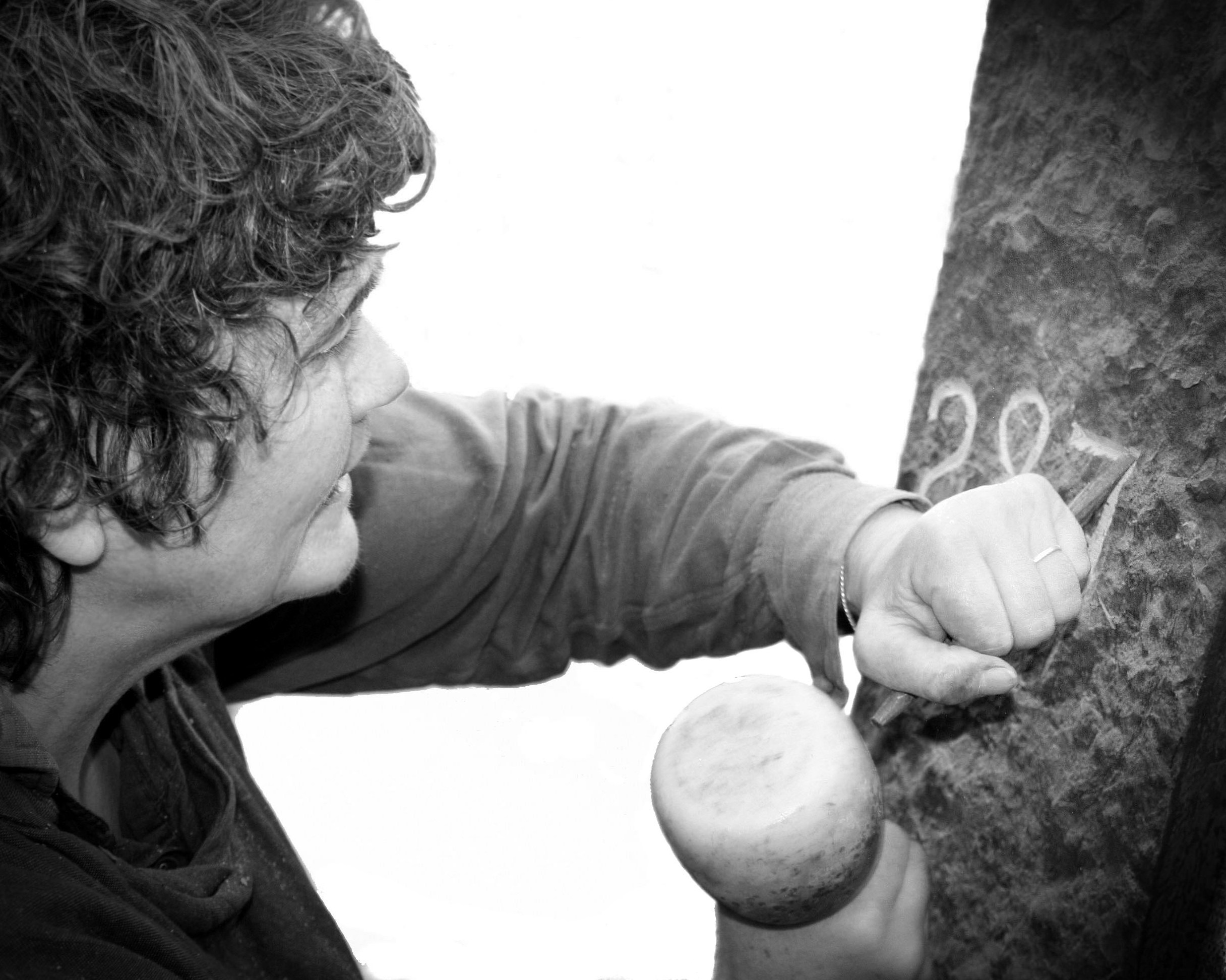
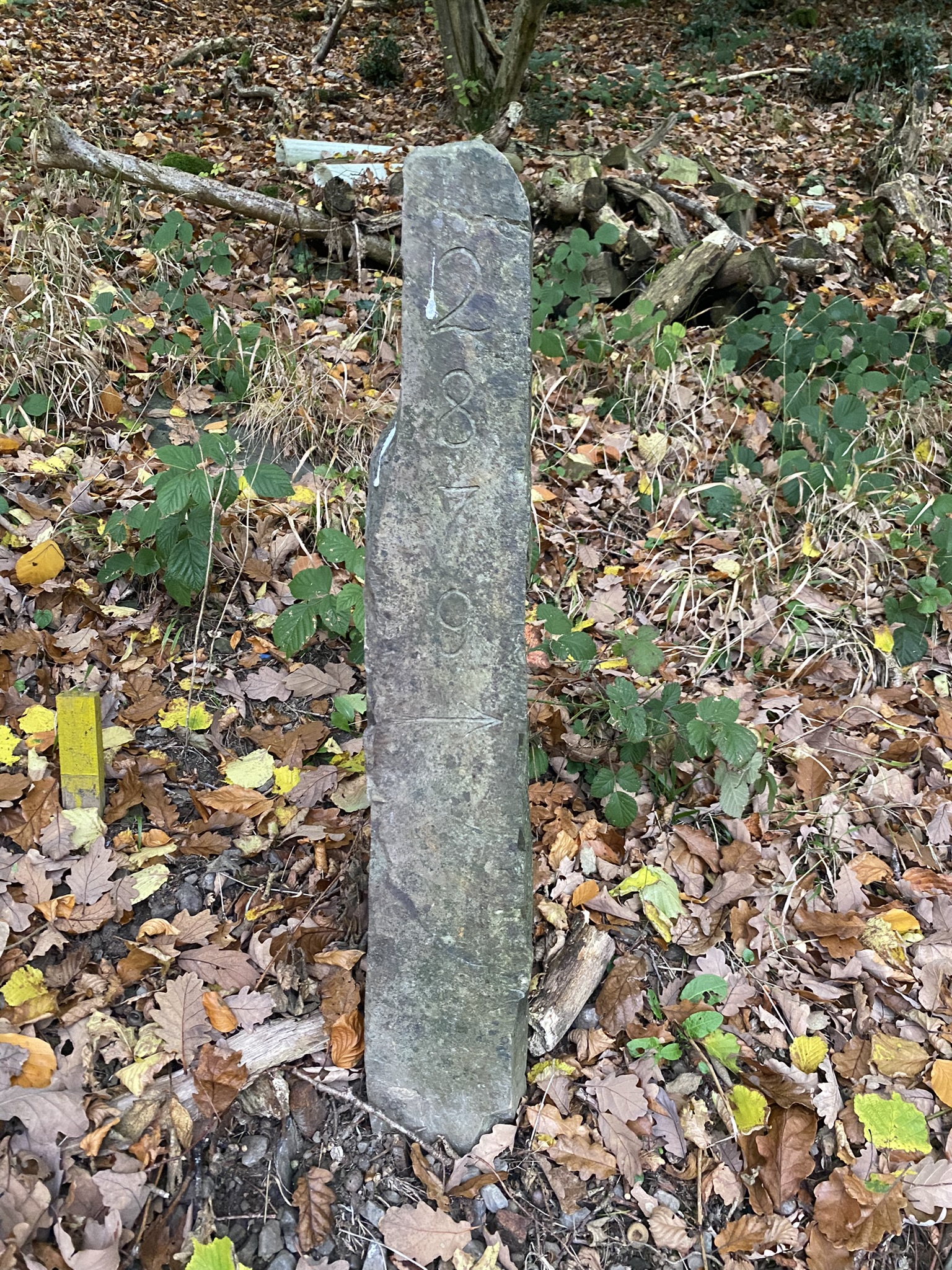
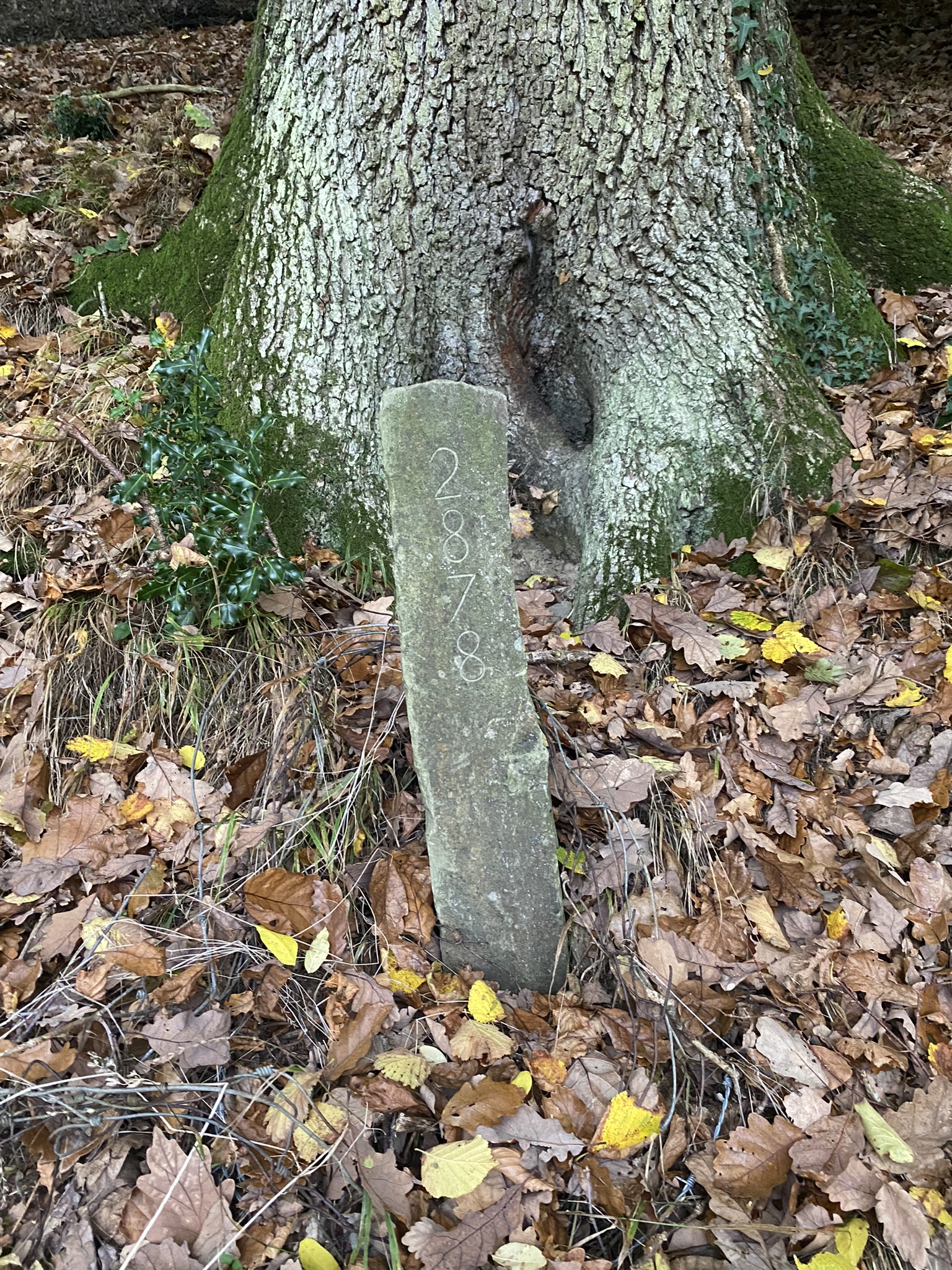
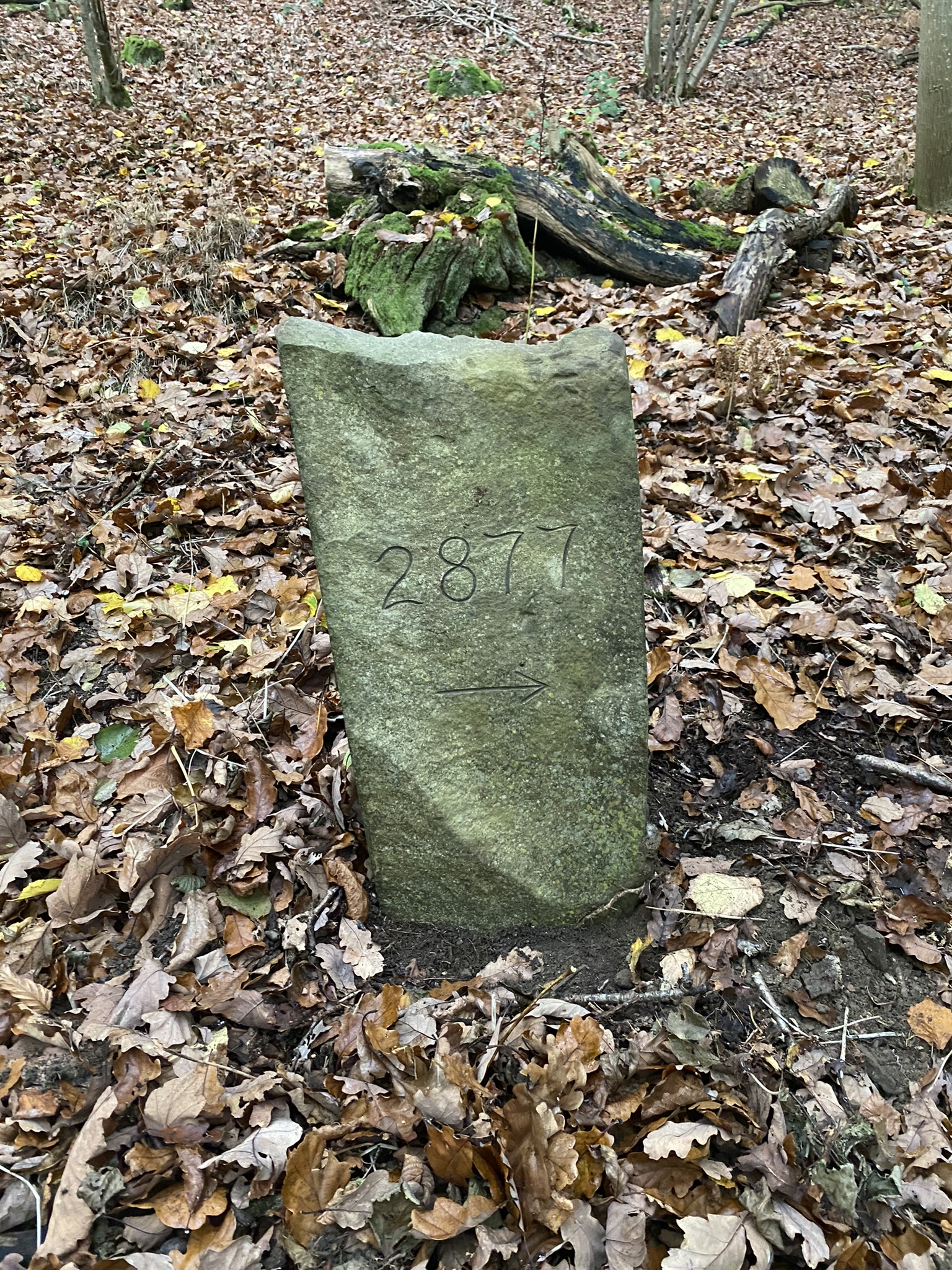
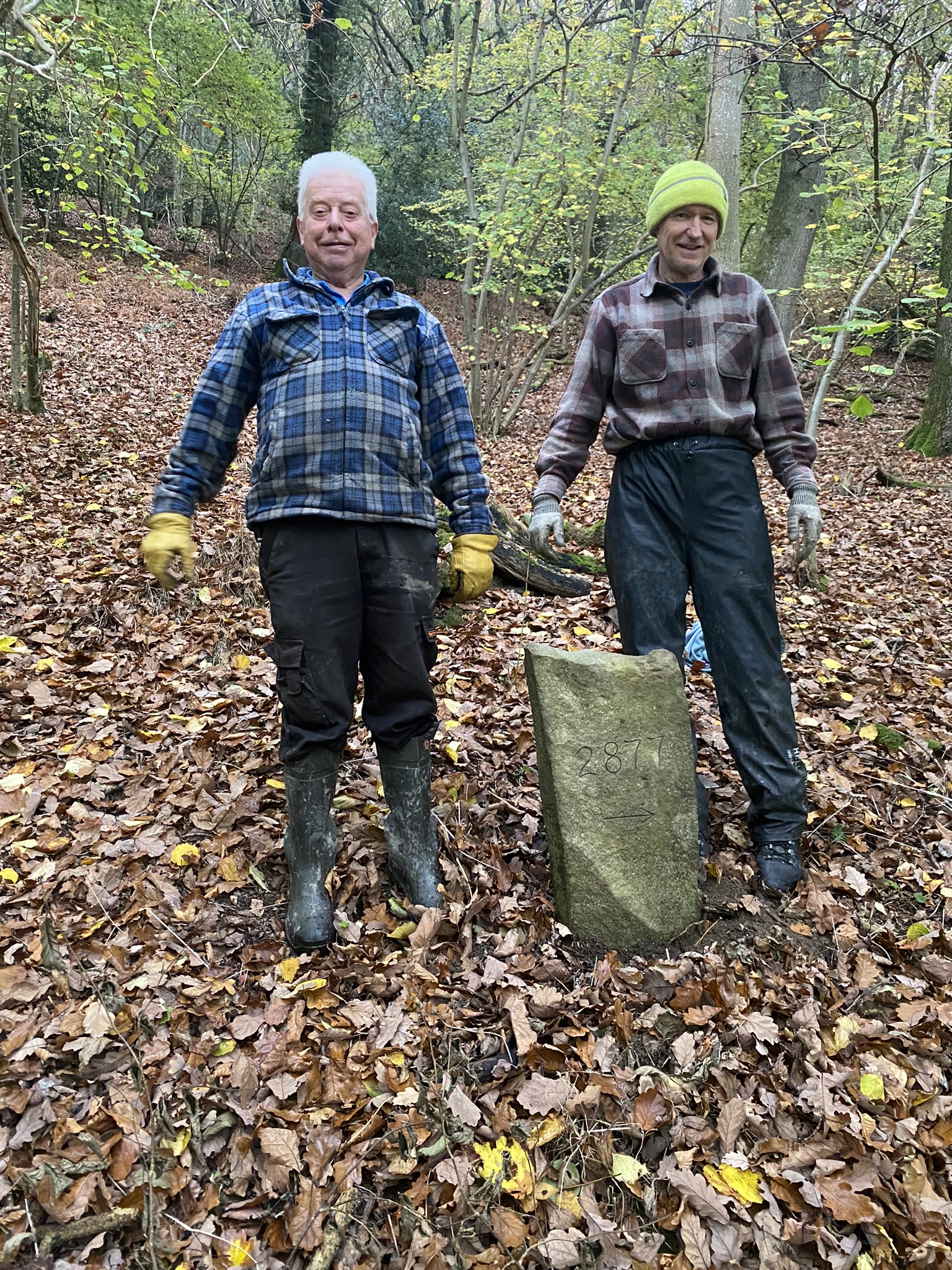
In November last year, we were happy to have erected two more quillet stones, making five in total if you count the one remaining original marker at the eastern end of the wood. Today we put in two more – numbers 2881 and 2882. These numbers date back to the 1848 Tithe Commutation when, rather than landowners having to pay tithes to the Church of England in kind, parishes were surveyed and every piece of productive land given an annual payment value that was split between the vicar and the Church. Some woodlands were exempted, and this applied to the quillets here in Brineddin Wood, although we don’t know why.


We also partly made up for the last two work-parties that had to be cancelled because of the rotten weather. Vegetation was cleared to help our critically endangered Spreading Bellflower re-appear this year and, very importantly, we made good progress in repairing deer fencing damaged by a fallen tree a few weeks ago. There’s another work party next Sunday, 23rd March. This will be in the afternoon – meet at the Chapel Lawn Village Hall car park at 1.30. Do join us.
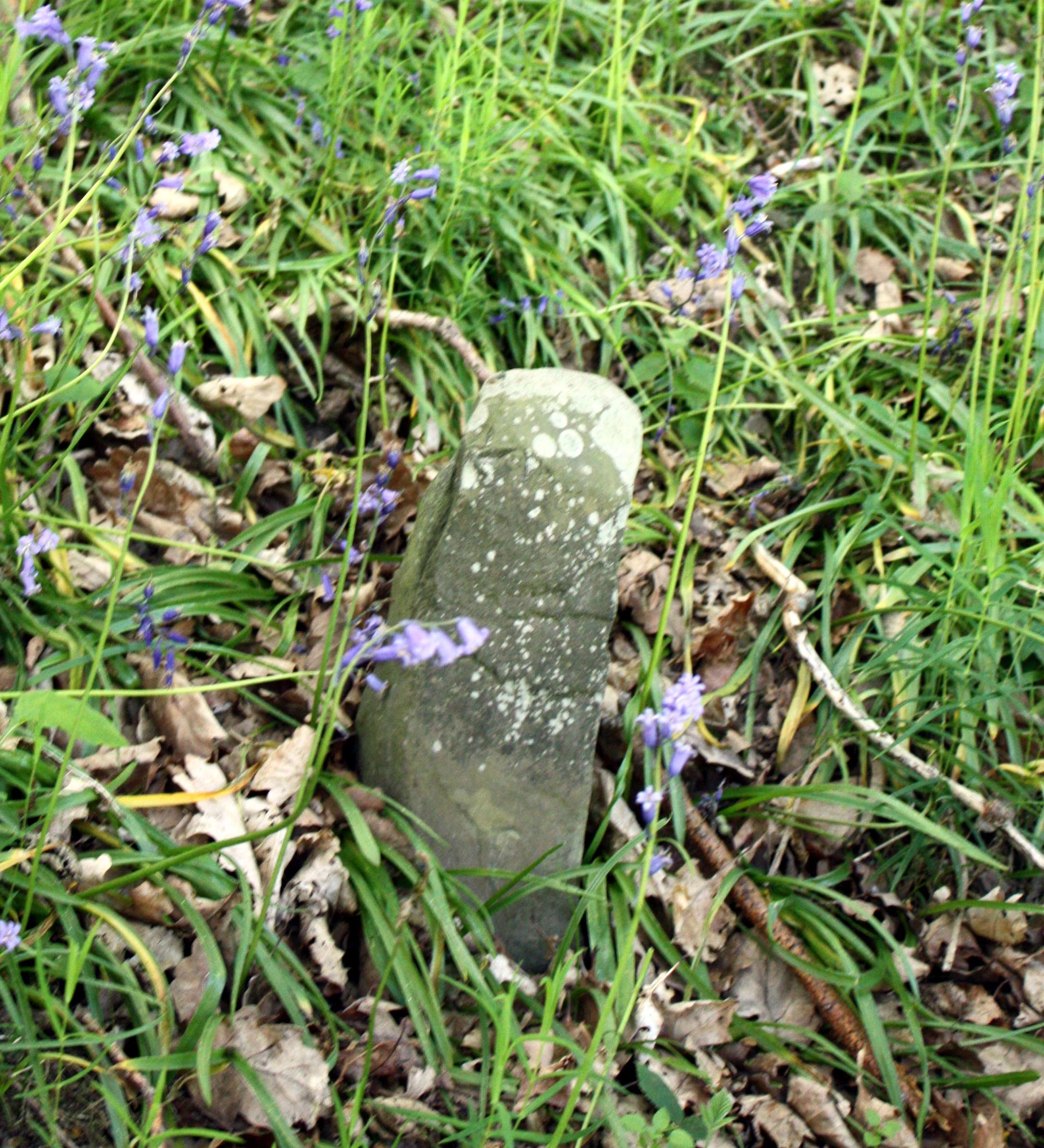
And talking of matters historical, here’s what Charles Mickleburgh, surveyor to the Earl of Powis said about the quillets in 1824 when he carried out a survey of the wood.
On the South side Brineddin Hill in this Township there are between 20 or 30 acres of Fine Oak Brush which is cut by the Freeholders each knowing his share by Mere stones at the Bottom adjoining the Hedge, but the top is open to the Common, and C M [Charles Mickleburgh] believes this to be a part of it. The Cottagers cut in it, altho’ the Freeholders grumble, but mostly towards the Top Part; there is a small Track near the top which the Freeholders wish the Cottagers to observe as their boundary, but little attention is paid to it , as the Brush grows much better nearer the bottom where they are tempted generally to go ….. The Mere stones are of recent date being put in about 17(blank!). If this land was coppiced up it would soon be covered with fine young Oak.
What a shame the date was left incomplete. We know the wood was first divided up in1637, and again in 1728, so a system of marking was probably devised then: old maps suggest that planting or retaining distinctive marker trees was one method, while stones may also have been employed or perhaps a little later.
And finally, here’s a photo of a small elder tree that was salvaged from a nearby hedging job last week. In time, it should give a good show of blossom in early summer, and also contribute to a more varied biodiversity. Might the berries even attract dormice?


 Redlake Valley Community Benefit Society