'Tis spring; come out to ramble
The hilly brakes around,
For under thorn and bramble
About the hollow ground
The primroses are found.

So wrote A. E. Housman in The Lent Lily. However, Mark and Patrick pictured here were less concerned with rambling the hilly brakes in search of primroses, and more with freeing the young hazel trees that are being choked off by the vigorous growth of bramble inside the deer exclosure.
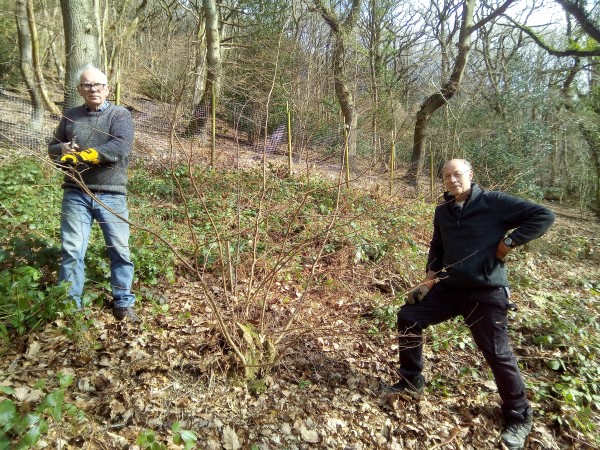
Since erecting the deer fencing five years ago, it has been conclusively proven that by keeping the deer out the ground flora will spring back and coppiced hazel has a chance to regenerate. You can see to the rear of the picture how bare the ground is beyond the fence. Although more will follow, new undergrowth so far consists largely of bramble. Often unfairly derided, bramble provides good cover for nesting birds and food for wildlife. Hundreds of creatures use it at different times of the year: insects visit the flowers for pollen and nectar, including bumblebees, honey bees, hoverflies, wasps, butterflies, moths, flies and lacewings. Hazel is also a valuable source of food for wildlife. Its leaves provide food for many moth species and coppiced areas of hazel where light penetrates provide more open flowery habitats that support many fritillary species of butterfly. Dormice feed on both blackberries and hazel nuts, but with a depleted ground flora throughout most of the wood, no evidence of their presence has yet been noted. Dormice live at low densities, are poor colonisers and have a low reproductive rate, so time will tell if we manage to attract them back. But we live in hope as there is at least one anecdotal report of their presence nearby.
 Redlake Valley Community Benefit Society
Hello Patrick – a belated reply. Firstly, apologies for not seeing this when you posted it ages ago. Secondly, thanks for the tip. Muntjac are certainly nearby. I’ve seen them in Clun, so they are probably here as well, although Roe lower down and Fallow on the high ground are what people mostly report. Best wishes, Patrick Cosgrove.
LikeLike
Hi Patrick – apologies. I didn’t see your replies when you sent them. The photo didn’t come through. Could you send it to pccosgrove@icloud.com
LikeLike
Just for your interest please see attached photograph of before and after deer populations were adjusted to protect a vulnerable SSSI habitat.
LikeLike
well done, it just proves that as lovely as deer are too many can have a negative impact on all other species within an echo system.
Make sure you keep an eye out for Muntjac deer as they are rapidly increasing in numbers and territory. They can and have been found tunnelling under deer fences.
LikeLike